A wallbox at your house: what to check before installing
At a house, installing a wallbox is usually simpler than in an apartment building. Even so, six points decide the solution. If you have them in mind, the visit is quicker and the proposal more accurate.

1. Contracted power
It is on your electricity bill, in kVA. A 7.4 kW charger needs a good share of it. If the house already uses a lot in the evening (oven, hob, heat pump), a charger with dynamic load management is worth it, or adjusting the power.
2. Single or three-phase
Also shown on the bill or at the panel. It defines which chargers you can use and the maximum power. See our power guide.
3. The electrical panel
The charger needs a circuit of its own with suitable protection, including residual current protection designed for vehicle charging. If the panel has no room or is old, modules may need adding or the panel refurbishing.
4. Distance and route
Where is the panel and where will you park? The distance and obstacles (walls, floors, outdoor runs) decide the cable, its cross-section and the type of conduit or trunking. It is the factor that varies most from house to house.
5. Indoors or outdoors
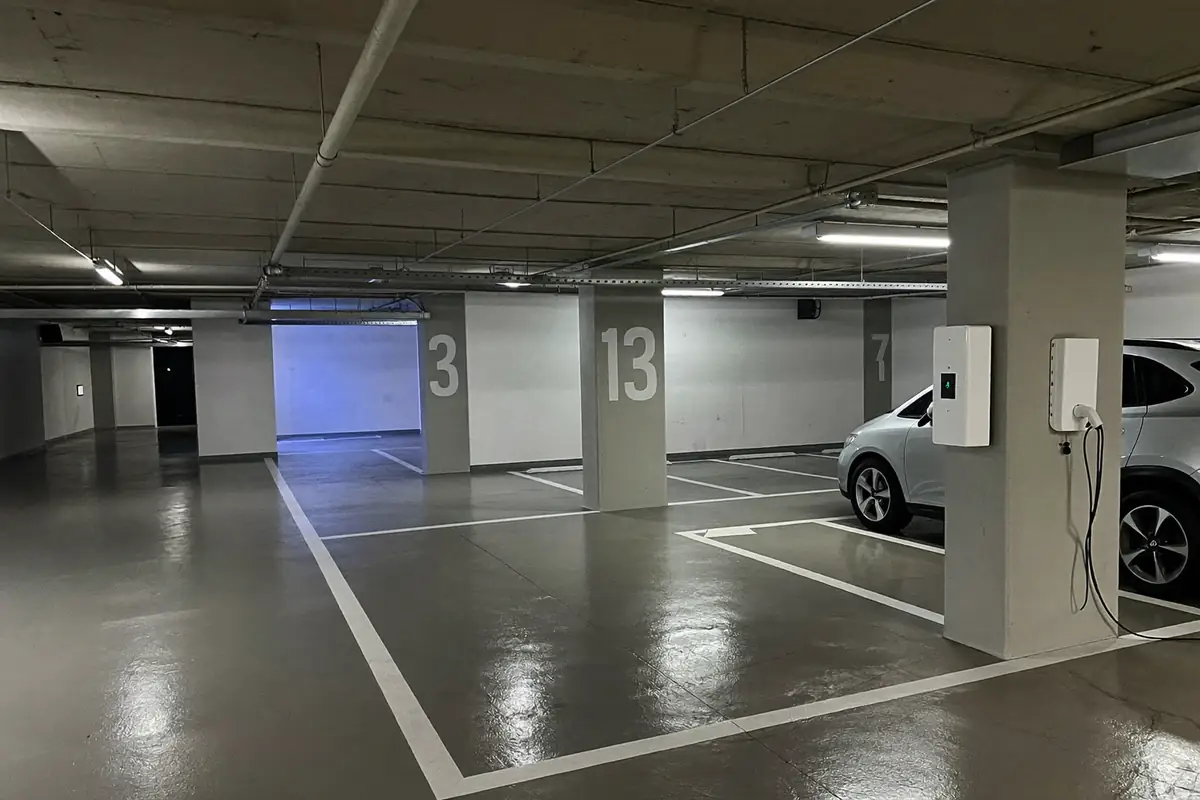
In a garage the charger is sheltered. Outdoors it needs suitable protection against rain and dust, and the route must use outdoor-rated materials.
6. Wi-Fi and the app
Many chargers come with an app to schedule charging, see consumption and update the software. If you want those features, check that your Wi-Fi reaches the garage.
Frequently asked questions
Can I use a normal socket instead of a wallbox?
For occasional use, yes, but it is slow and keeps the circuit at its limit for hours. For daily use, a wallbox on a dedicated line is the safe solution.
I have solar panels. Can I charge with the surplus?
With some chargers, yes. On the visit we tell you which models do it well with your installation.